[Report] 2-Day Trail and Traditional Arts & Kabuki Experience in Ena City
Echoes of GIFU: a journey into the spiritual heart of Ena and Nakatsugawa
In the golden light of September 2025, as the first hints of autumn began to brush the highlands of Gifu, we hosted an small-group journey into the soul of the Japanese countryside. The Ena and Nakatsugawa area, once a vital artery of the historic Nakasendo Highway, serves as a living sanctuary of rural philosophy.
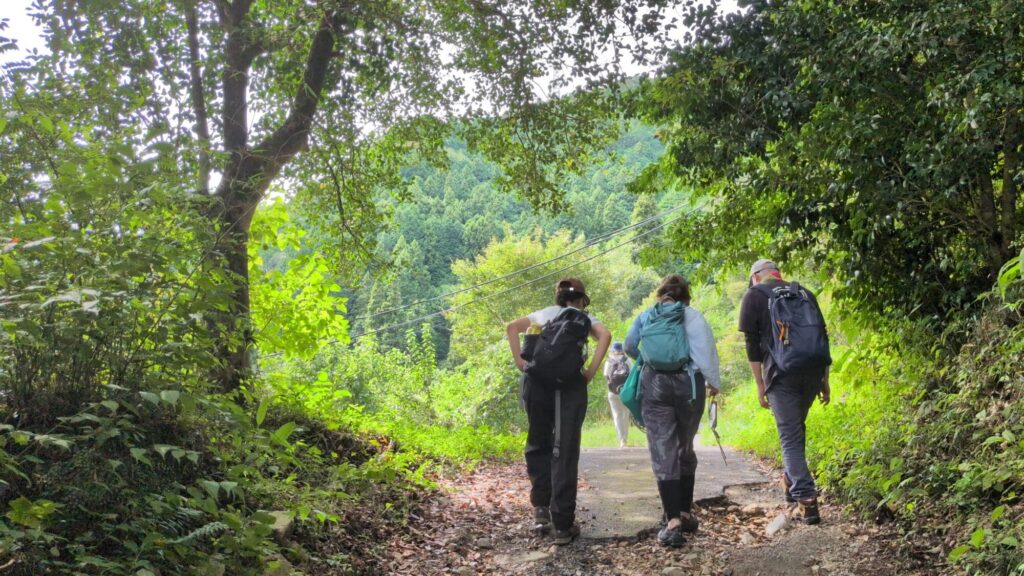
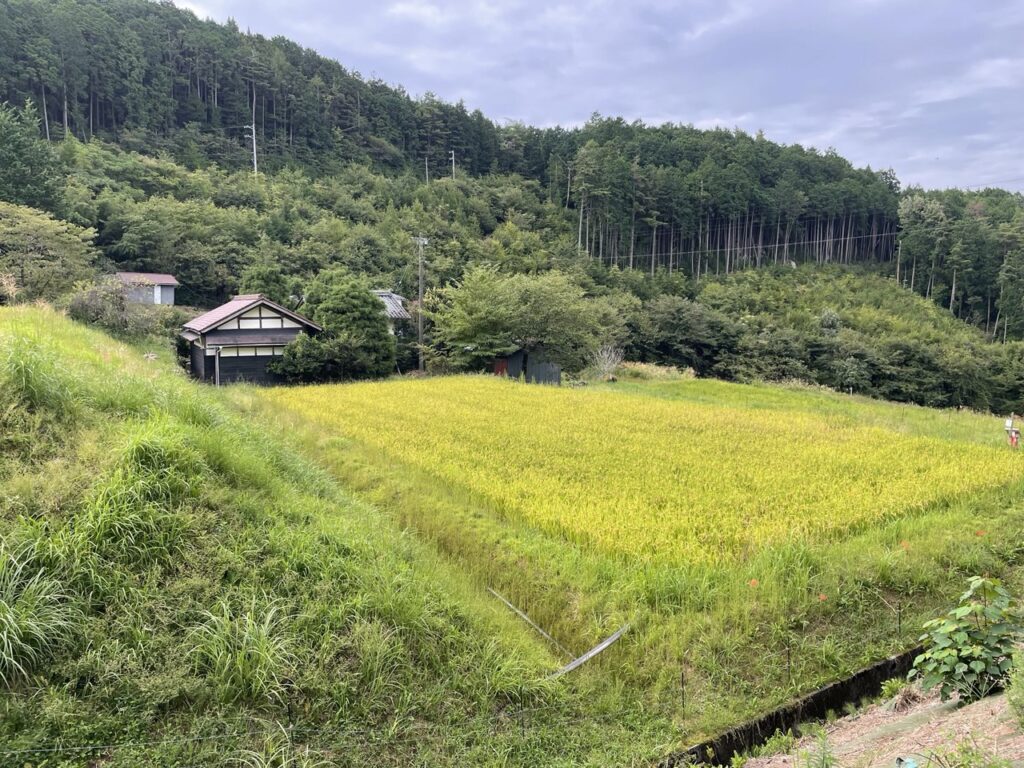
While many travelers flock to the famous post towns like Magome, there is a deeper, more silent beauty waiting in the surrounding mountains. Our recent expedition to Iiji, a secluded highland village, was designed as a bridge between international explorers and the local community, facilitated by expert interpretation and cultural guiding to ensure every story was heard and every nuance understood.
Beyond the Post Towns: Rediscovering the Ancient Paths
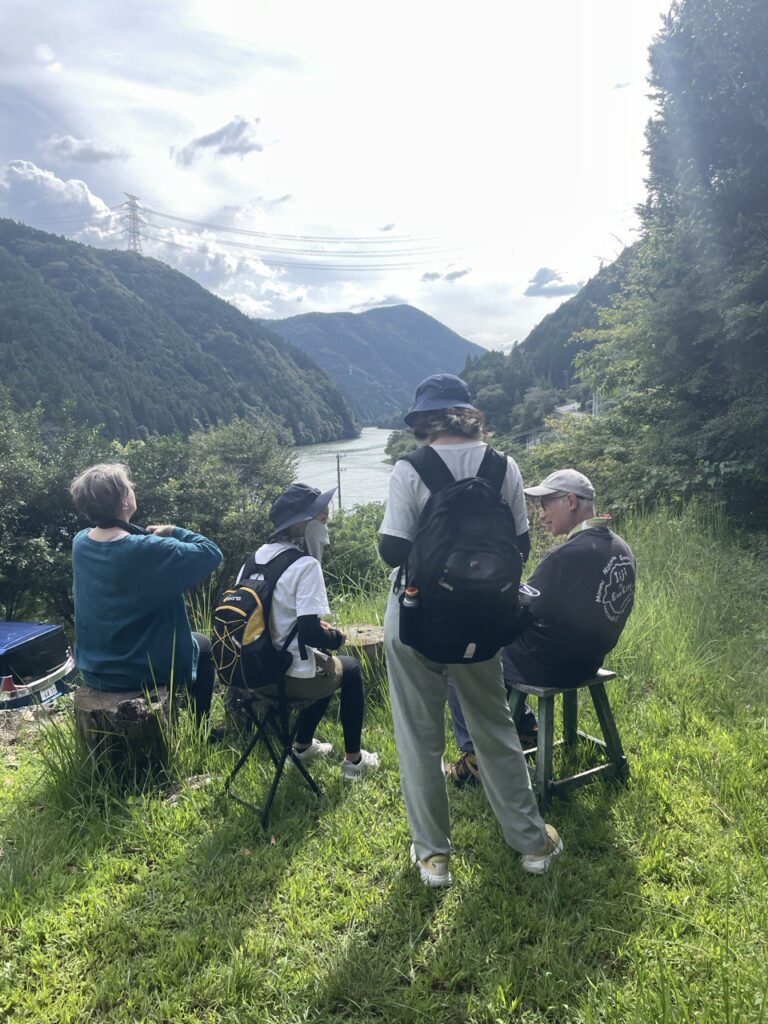
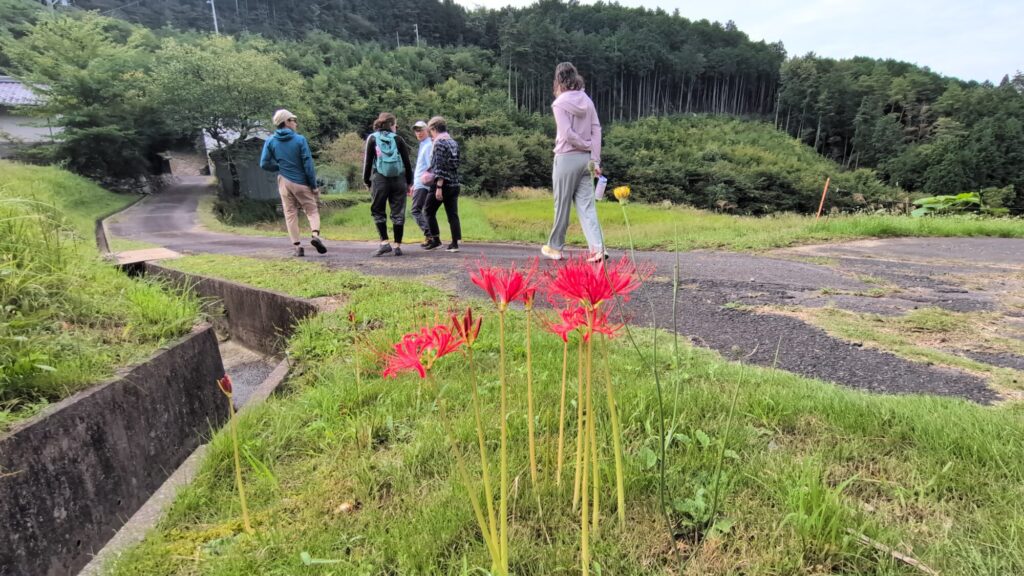
Our exploration began near the emerald waters of the Kiso River at Kasagi Gorge.
While the Nakasendo is renowned for its well-preserved architecture, the true spirit of the region lies in the "hidden paths" that connected these historic hubs to the mountain communities.
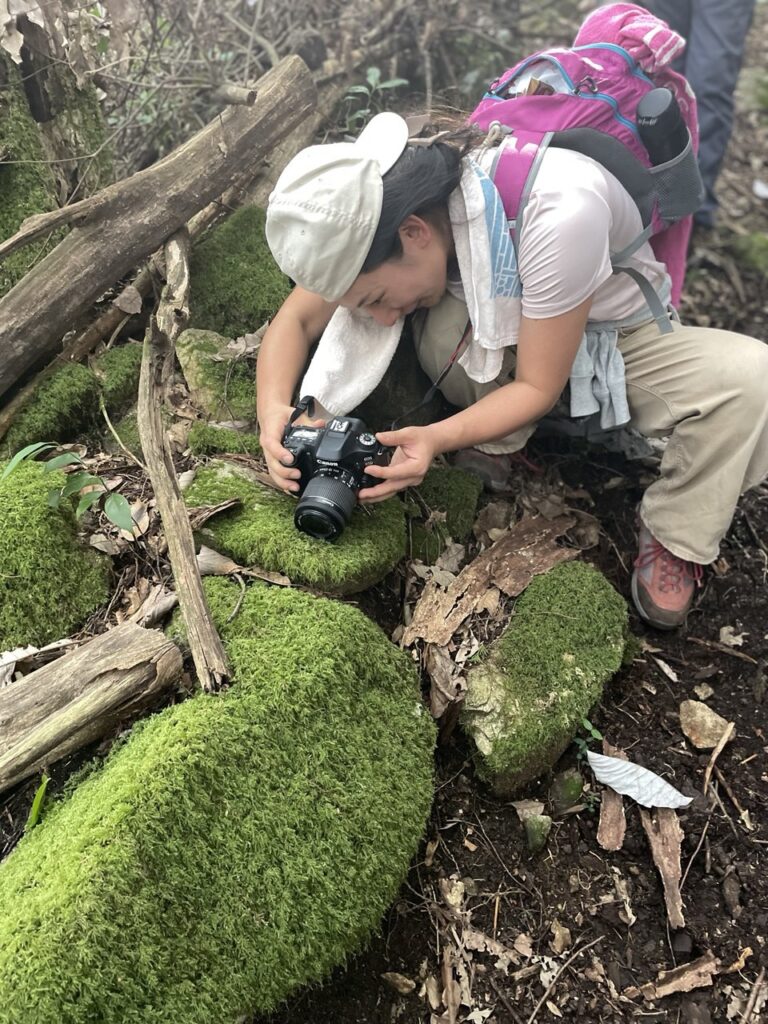
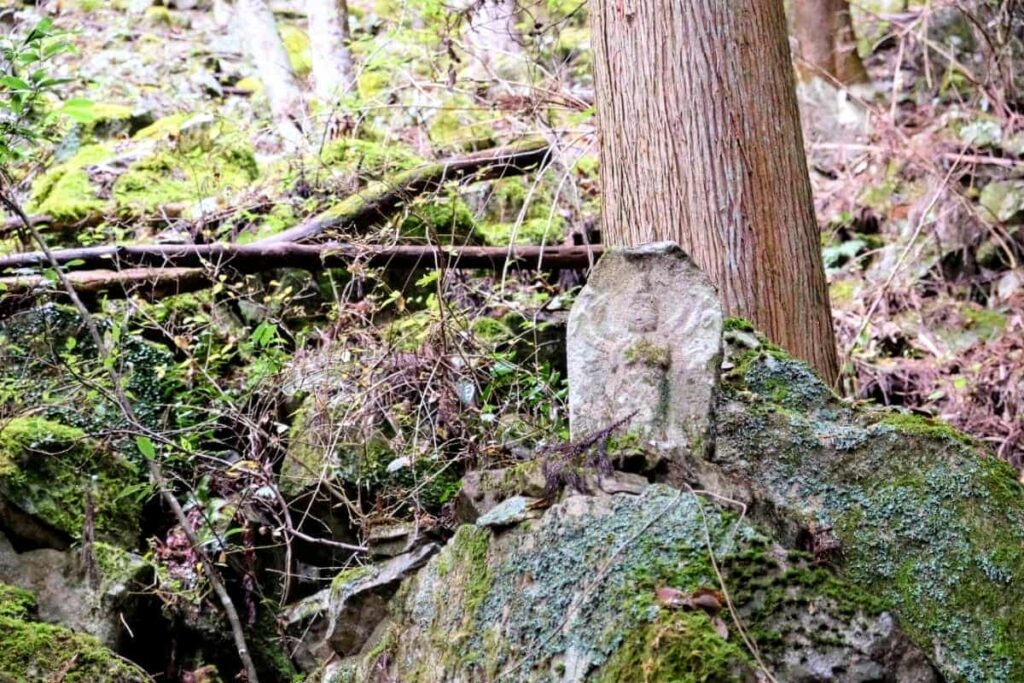
Led by our specialist guides, our small group traversed the Old Kawai-saka Trail, an atmospheric route once trodden by local villagers and traveling nobility alike. Walking these paths is an exercise in mindfulness.
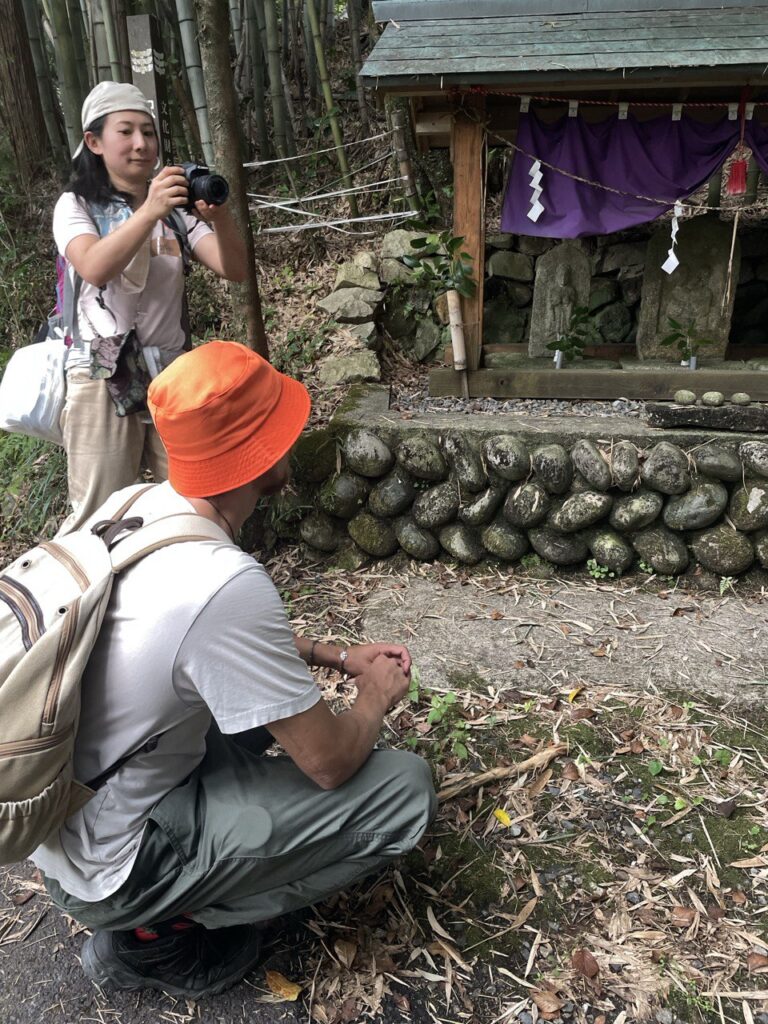
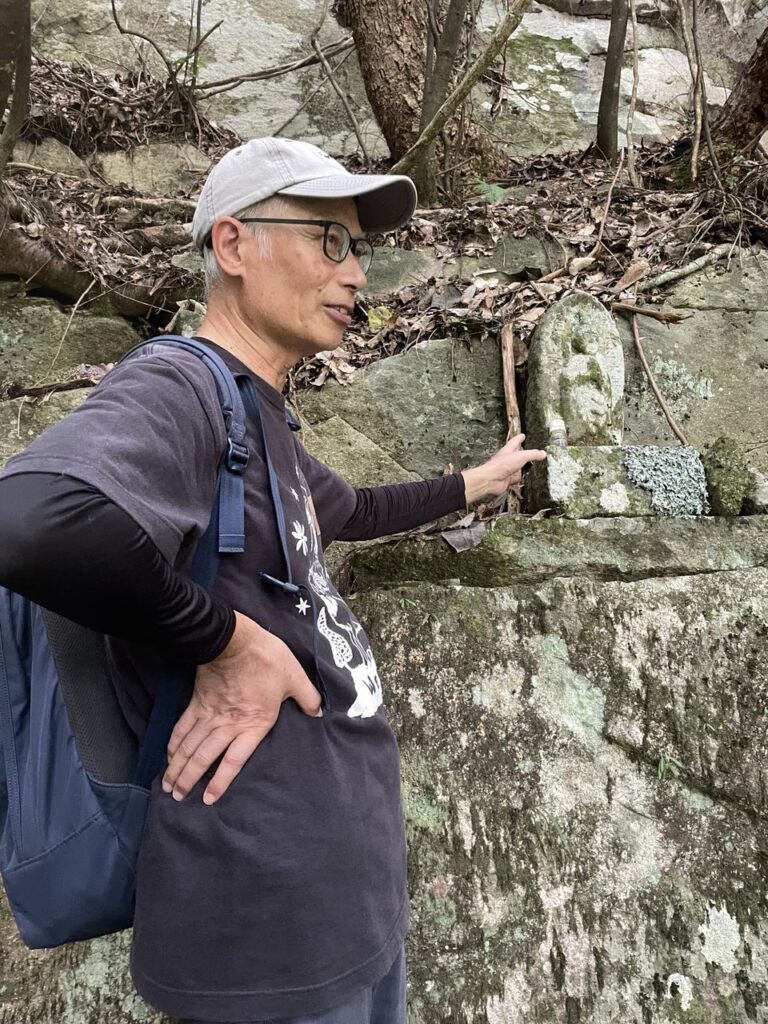
Between the moss-covered stone walls and the natural wind caves, our interpreter shared the local legends that cling to these rocks—stories of princesses seeking rest and villagers bidding farewell to loved ones.
It is here, away from the typical tourist circuits, that the authentic landscape of rural Japan reveals itself in its most pristine, unvarnished form.
The Hearth of Hospitality: A Night at Guesthouse Kannagara
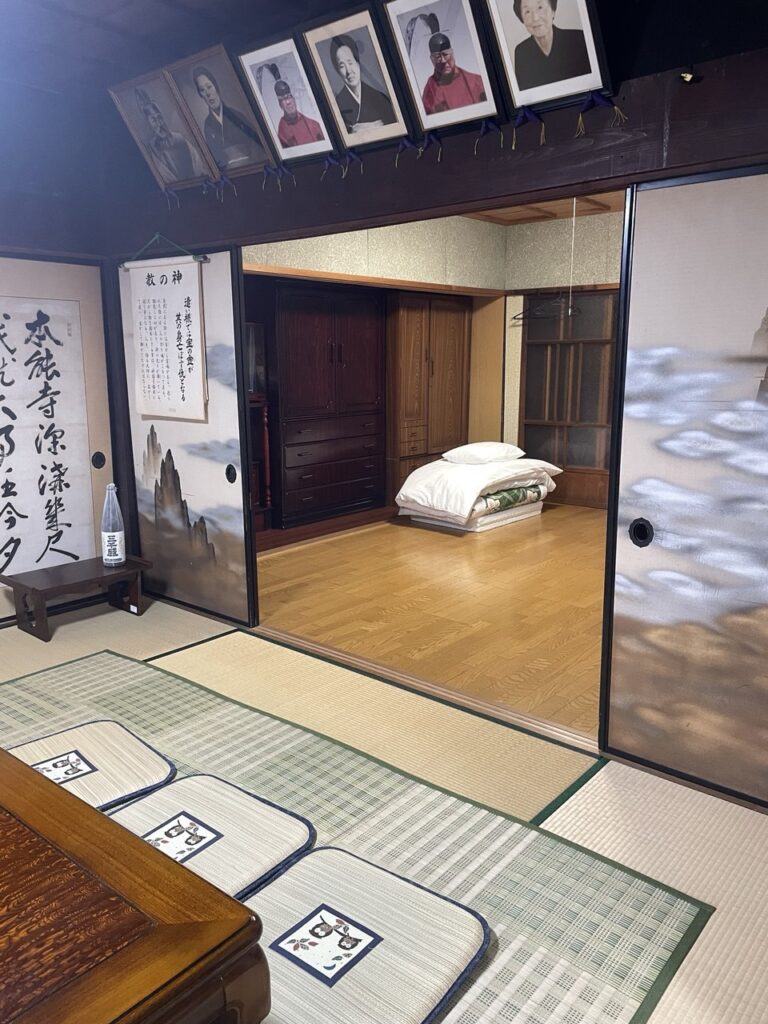
To truly connect with the spirit of Ena, one simply needs to slow down. We found our home for the night at Guesthouse Kannagara, a traditional residence with a storied past as a Shinto priest’s home.
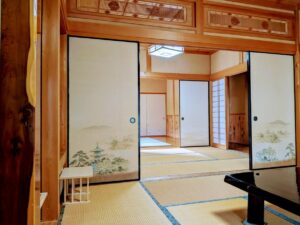
The house is a masterpiece of quiet elegance, featuring expansive tatami rooms adorned with exquisitely painted fusuma (sliding doors) that capture the artistry of a bygone era.
Here, the grounding scent of weathered wood and the gentle mountain air replace the frantic pace of modern life. After a day of exploration, our guests retired to exceptionally high-quality futons—fresh, fluffy, and designed for deep restoration.
It is the kind of comfort that only a true Japanese home can provide, ensuring everyone woke up refreshed and ready for the morning light.
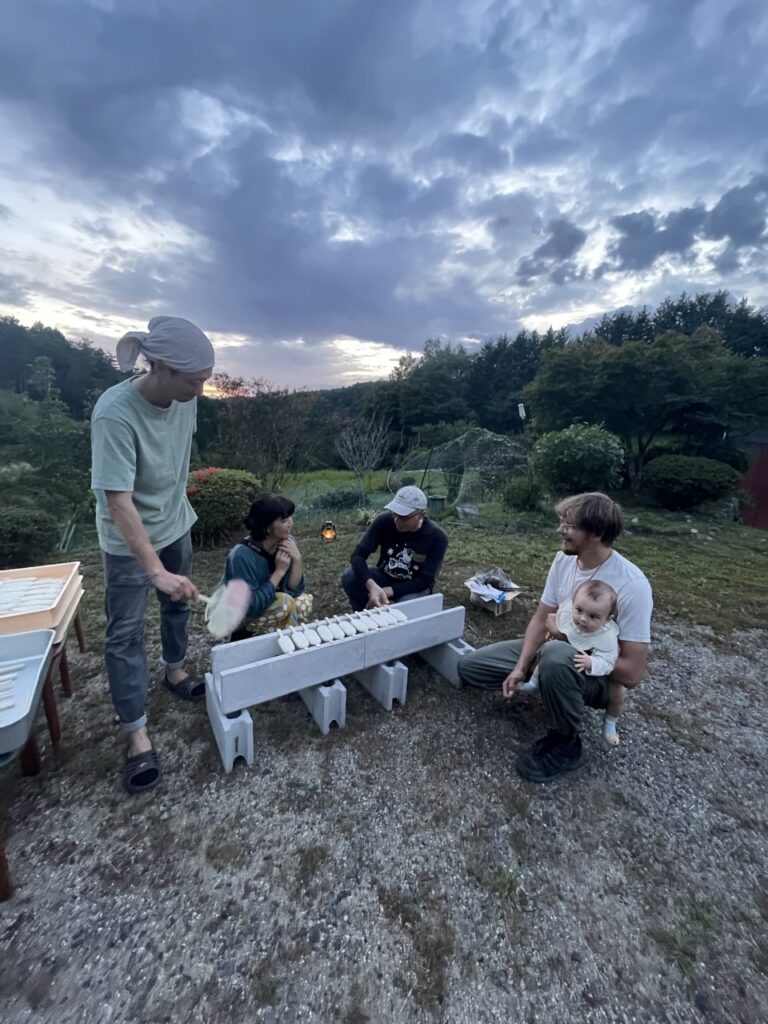
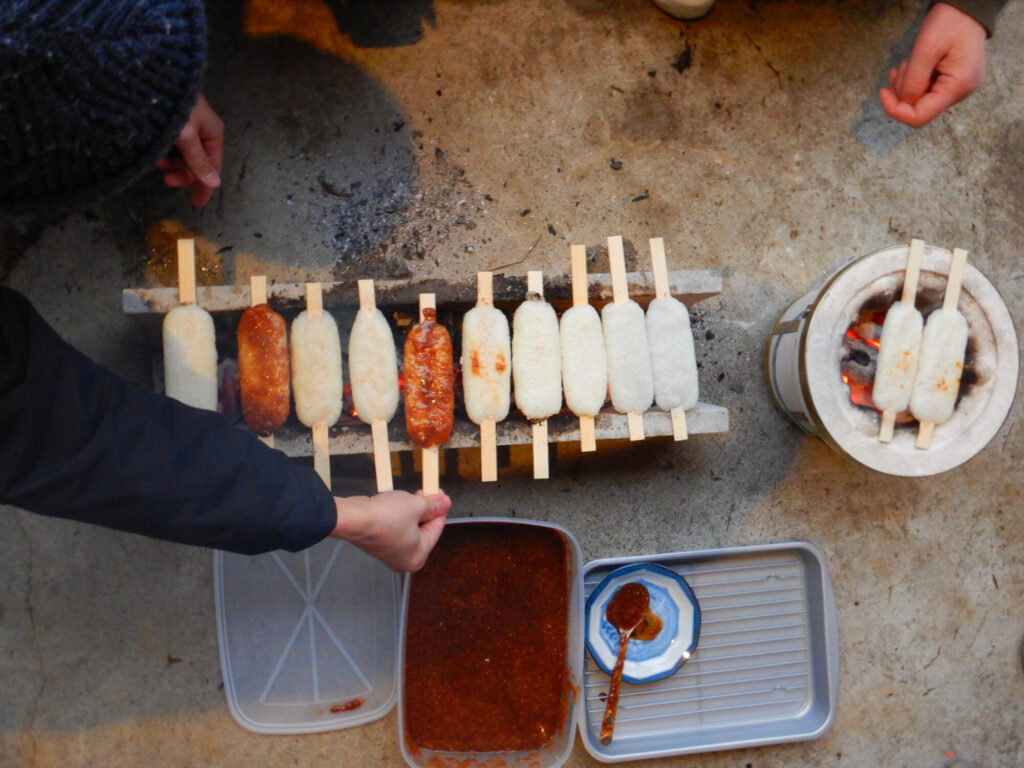
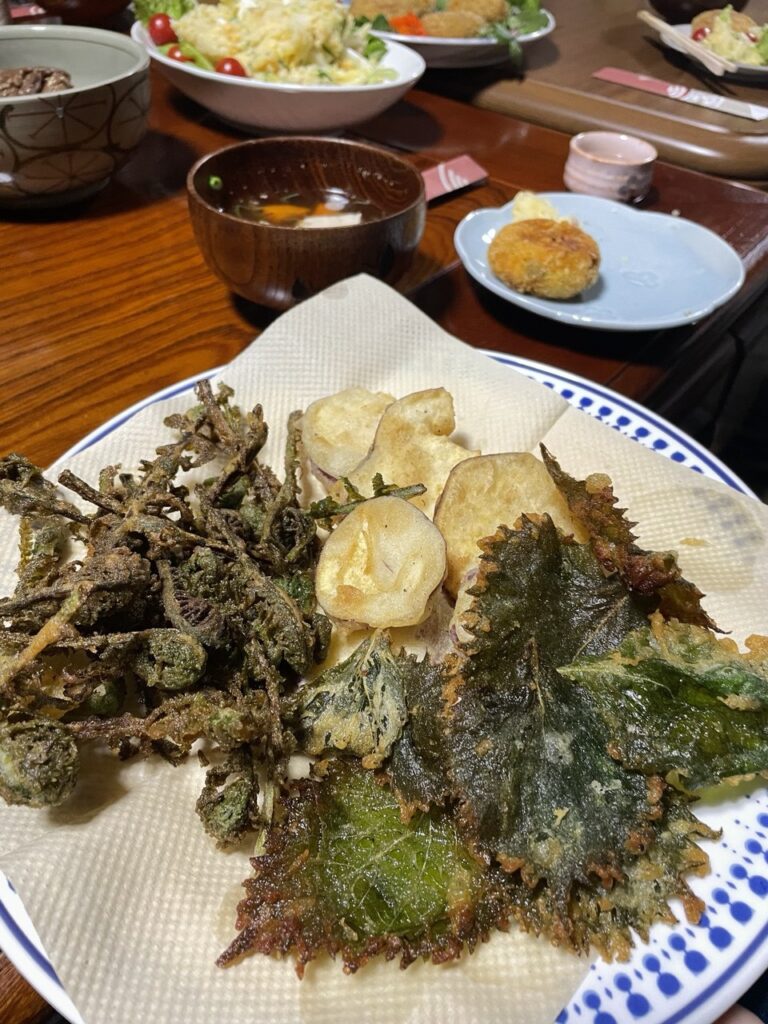
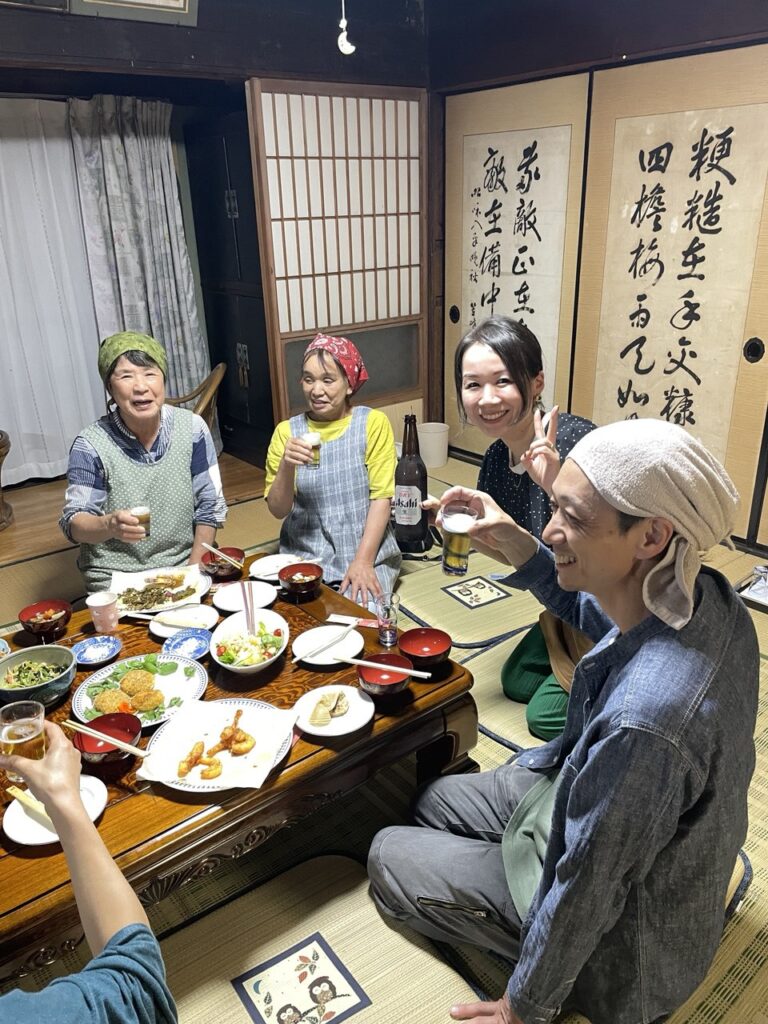
The evening was a masterclass in local gastronomy and the wisdom of seasonal living. We gathered to grill Gohei-mochi—a signature dish of the Nakatsugawa and Ena countryside made of crushed rice basted in a rich walnut and miso glaze. In the cozy atmosphere of our private setting, our guests engaged in deep conversation with local residents, bridging cultures over cups of local sake and traditional fermented delicacies.
A Living Stage: The Majesty of Ji-kabuki
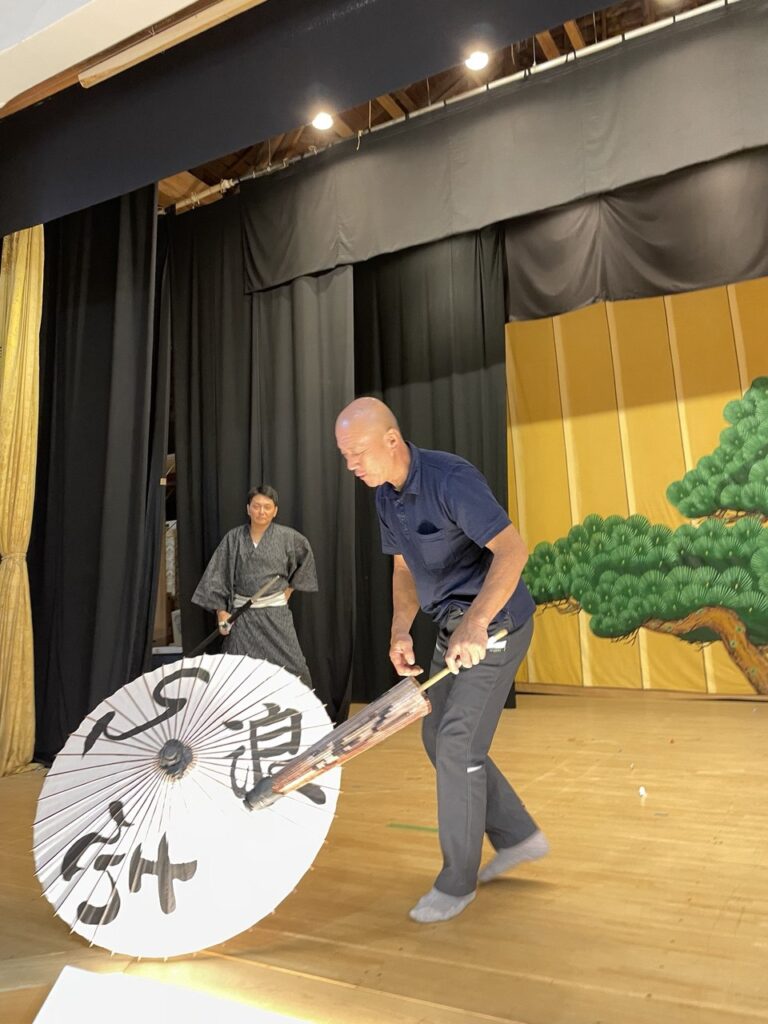
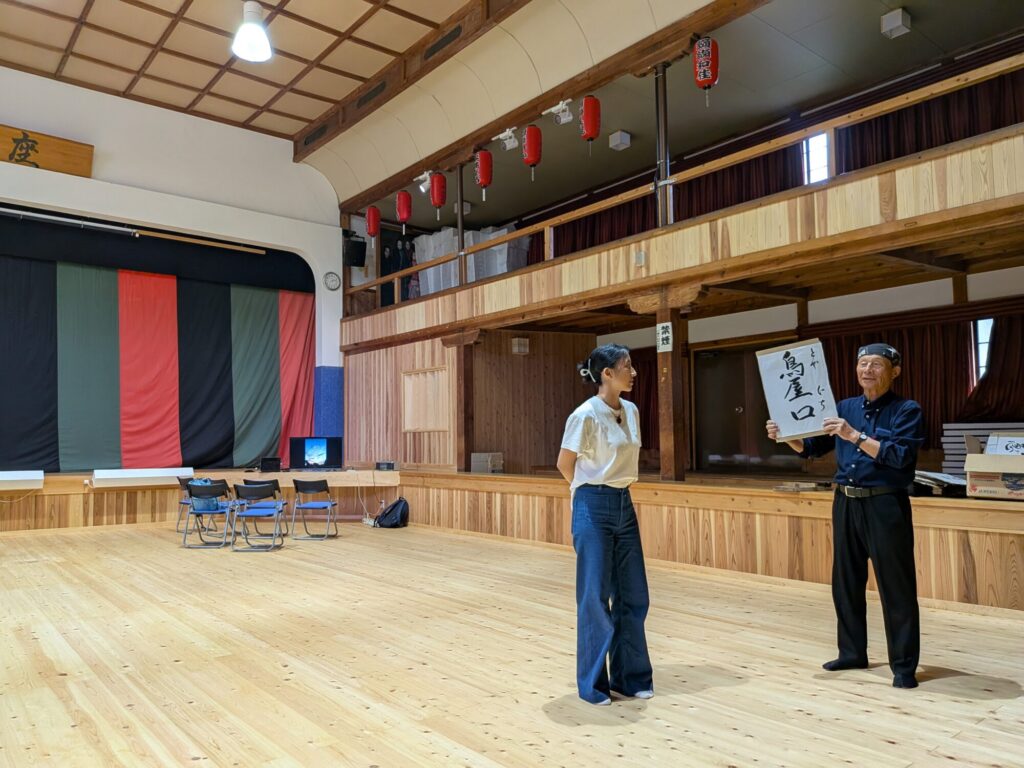
The soul of Iiji is found within the walls of Gomoza, a historic playhouse dedicated to Ji-Kabuki (local Kabuki). This is the "people’s Kabuki," an art form that has been preserved not by professional actors in distant cities, but by the hands and hearts of the villagers themselves since the Edo period.
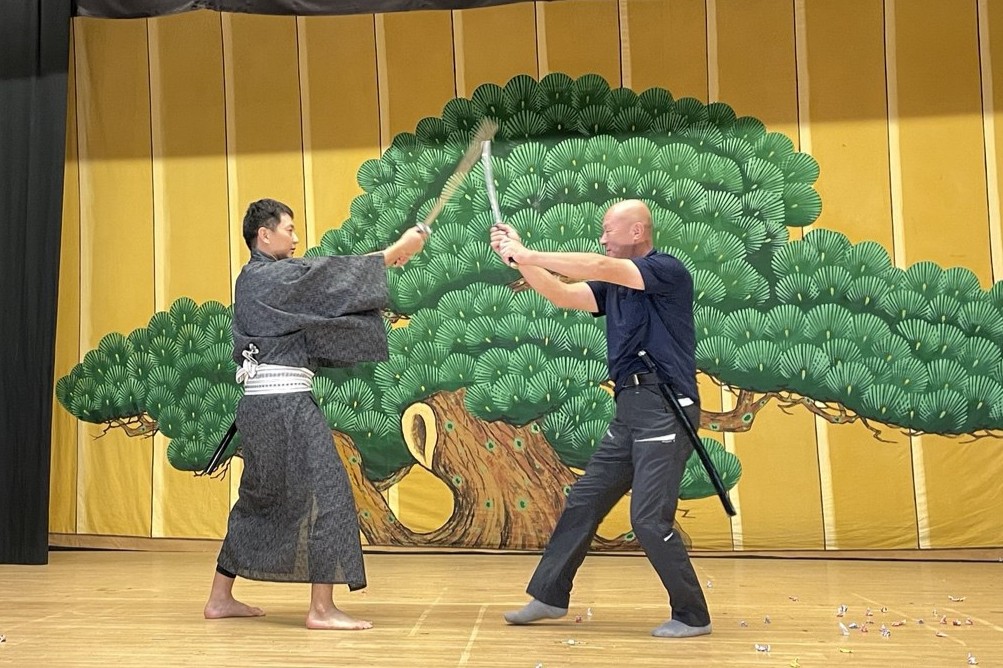
After witnessing the powerful, stylized expressions of the local troupe, our guests had the rare privilege of stepping onto the ancient cypress boards to learn the disciplined "Mie" poses, feeling the weight of the tradition firsthand.
What Is Ji-kabuki?

To truly appreciate the experience at Gomoza, one must understand the unique essence of Ji-kabuki. While the grand Kabuki theaters of Tokyo and Kyoto are the realm of professional dynasties, Ji-kabuki (literally "earth" or "local" kabuki) belongs to the people.
Historically, during the Edo period, kabuki was one of the few precious forms of entertainment available to rural communities. In the mountain villages like Ena and Nakatsugawa, residents organized their own troupes and built their own playhouses as an act of communal resilience and artistic devotion.
Today, this tradition is far from a relic of the past; it is a vibrant, living culture. In Iiji, the torch is carried by both the young and the old. Local elementary and junior high school students participate in dedicated circles, finding joy in learning the stylized movements and complex dialogue. Parallel to this youthful energy, the adult members of the Iiji Gomoza Kabuki Preservation Society perform with a level of mastery and authenticity that rivals professional stages.
In Iiji, the stage is a place where neighbors transform. When you witness a performance at Gomoza, you are seeing the true heart of the village in motion.
The fierce samurai on stage might be the local carpenter by day; the elegant princess could be a government official or a shopkeeper.
Connecting the Dots of Hidden Gems
As our journey through the highlands drew to a close, it became clear that in the quiet corners of Ena and Nakatsugawa, travel is less about ticking boxes and more about the resonance of these small, lived moments.
There is a rare clarity to be found here—in the crisp scent of the mountain air and the genuine connections formed across a shared table.
Ultimately, we hope that when you visit, you feel not like a mere spectator, but like a welcome guest in an enduring story.
The ancient paths of the Nakasendo and the warm hearths of Iiji are waiting to be rediscovered, at a pace that is entirely your own.
#DEEPJAPAN IN LATE SPRING: SAVORING THE BEST OF THE SEASONS IN THE BEAUTIFUL COUNTRYSIDE OF GIFU
Spring is a time of celebration in our mountain community.
Join our upcoming tour to witness the passion of local Ji-Kabuki and immerse yourself in the vibrant cultural heritage of the Gifu highlands.